


There's a new trend across SEO communities: automating your entire SEO operation with the Claude SEO skill.
People install it, run a few commands, and watch it analyze their site, research competitors, generate content strategy, write articles, and optimize everything, completely hands-free.
Six months later, most of these sites have dropped rankings and lost traffic. And nobody understands why the "automated SEO" stopped working.
This guide explains what the Claude SEO skill actually does, why it kills your rankings, and why it won't replace real SEO.
TL;DR
The Claude SEO skill automates SEO execution: research, audits, content generation, optimization. It doesn't do SEO strategy or understand your business.
Sites using the skill generate content that's optimized but generic. When everyone uses the same automation analyzing the same competitors, they all create similar content.
Google's algorithms spot this pattern. Rankings drop within 3-9 months.
If you want SEO that works, use the skill for research speed. Not for automated publishing.
What the Claude SEO Skill Actually Is
The Claude SEO skill is a pre-built automation package that connects Claude to SEO tools and executes complete workflows with single commands.
Instead of manually prompting Claude for each task, you install the skill once and run automated commands:
- Analyze your entire site for technical SEO issues
- Research competitors and identify content gaps
- Generate keyword strategies and content calendars
- Write complete articles based on competitor analysis
- Optimize everything and create ready-to-publish content
While the Claude SEO skill can help generate optimized content quickly, SEO is more than formatting and keywords. Without strategic planning behind the content, it's difficult to achieve consistent rankings in competitive search results.
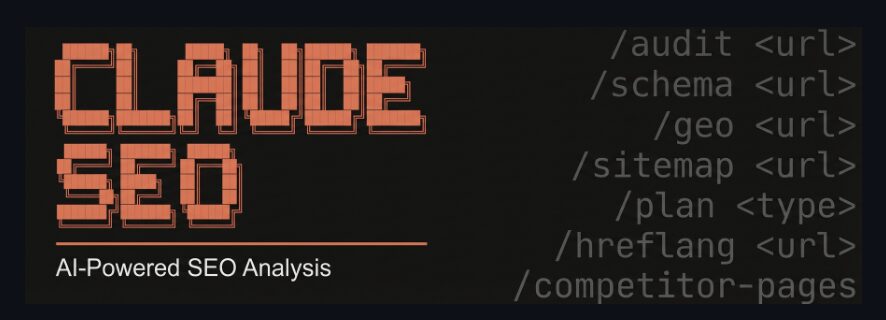
Try This Claude SEO skill code by – Agrici Daniel – Github
What Actually Happens When you Use Claude SEO Skill
Here's the pattern that keeps repeating.
omeone installs the SEO skill and within days they have a complete content plan, dozens of optimized articles, and everything appears technically perfect. The site publishes quickly and early results start to appear.
Month 2–3: A few articles begin ranking and traffic starts to increase.
Month 4–6: Growth slows. New articles take longer to rank and existing pages stop gaining momentum.
Month 7–12: Rankings begin to decline across multiple pages. Traffic drops, and the content that initially performed well gradually loses visibility.
It's a cycle that many site owners experience when technical optimization replaces real SEO strategy.
Why It fails
Most SEO automation tools analyze the same data source: the current top-ranking pages for a keyword. The problem is that everyone using these tools is analyzing the exact same set of results.
The outcome is predictable.
Multiple websites extract the same topics, follow the same recommended structure, and publish articles that look almost identical. The formatting is clean, the keywords are present, and technically everything appears optimized.
On the surface, the content checks every SEO box:
Covers the expected topics
Targets the right keywords
Proper heading hierarchy
Internal linking structure
Optimized metadata
Schema markup implemented
But search performance depends on more than technical completeness.
What these pages often lack is the strategic depth that makes content competitive:
No original insights or perspectives
Content that reads similarly across dozens of sites
Little connection to the specific business behind the website
No clear explanation of why a company is different from competitors
No strong reason for search engines to rank one page above another
In other words, the execution may be automated, but the strategic thinking behind the content is missing.
You're competing against yourself
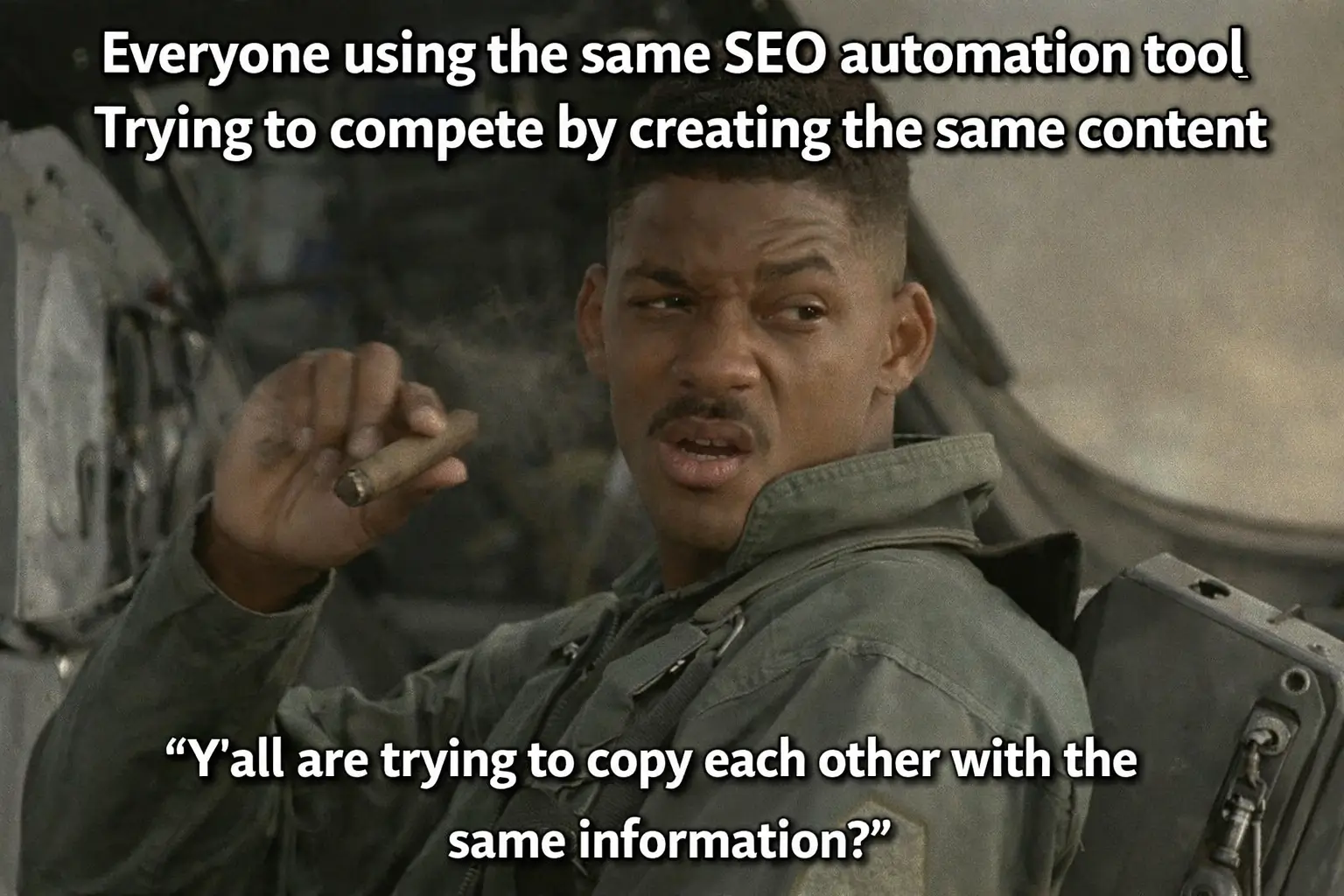
If you and your competitors all use the same skill analyzing the same top pages, you're all creating variations of the same content.
Nobody wins. You're all fighting for scraps while actual authority sites hold the top positions.
Google spots the pattern
When hundreds of sites publish similar content at the same time using similar structures, Google's algorithms notice.
The content that ranks offers something genuinely new. Content created by remixing existing top-ranking pages doesn't qualify as new.
Automation eliminates the exact thing that makes content rank: differentiation.
When Judgment Gets Replaced by Automation
After relying on an automated SEO workflow for a while, something subtle starts to happen. The focus shifts from thinking strategically to simply following the system.
The important questions begin to disappear:
Should this piece of content exist in the first place?
Does it genuinely serve our users better than what already ranks?
Does it reflect our real expertise and experience?
Will it actually help our business grow?
Instead, the process becomes mechanical:
Was the content optimized by the tool?
Are all recommended topics included?
Is everything ready to publish?
Over time the process changes how you approach SEO. Instead of evaluating whether something should exist, the focus becomes whether it can be generated and published.
What SEO Actually Requires (That the Skill Can't Do)
The Claude SEO skill handles execution. It can't do strategy.
Here's the difference: The skill identifies high-volume keywords. But it doesn't know which keywords convert for your specific business model. It shows you what topics currently rank. But it can't tell you what unique perspective you can offer that competitors miss.
The skill analyzes top-ranking page structures. But choosing the right angle to serve users better, that requires understanding your market and customers. The skill knows if content is technically optimized. But knowing if content is actually good enough to publish requires editorial judgment.
Strategy isn't about analyzing data. It's about making business decisions. The skill can't do that.
The "AI Agency" Scam
Agencies are popping up selling "AI-automated SEO with Claude."
Here's what they actually do:
- Install the same Claude SEO skill you can install yourself
- Run the automation commands
- Send you the output
- Charge $2,000-5,000/month
You're paying someone to press buttons.
Real SEO agencies use tools like the Claude SEO skill to work faster. They don't use them to replace thinking.
If an agency's pitch is "we automate everything with AI", they're selling automation, not strategy. The results will be temporary.
What Google Actually Rewards
Many automated SEO systems are built around the same process: analyze what already ranks, extract the common topics, and generate content that covers those topics as completely as possible.
On paper, this seems good. If top-ranking pages cover certain points, then covering those same points should help you rank too.
But when everyone follows the exact same formula, the result is predictable: dozens of pages that look nearly identical.
Search engines have become good at identifying this kind of pattern-driven content.
What tends to perform better are pages that bring something new to the results, such as:
Original research or proprietary data
Insights that come from real experience
Perspectives competitors aren't offering
Clearer or better solutions to real problems
Information users can't easily find elsewhere
In other words, strong rankings usually come from adding value to the search results, not just reproducing what already exists.
The Real Cost
The Claude SEO skill seems cheap. $20/month for Claude Pro. No agency fees.
But here's what you're actually paying:
Opportunity cost: Every automated article is a slot you could have filled with genuinely valuable content. After 6 months, you have 50 mediocre articles instead of 10 great ones.
Brand damage: Generic content makes your brand look generic. Visitors read one article, realize it's the same as everyone else's, leave, and never come back.
Wasted effort: When automated content fails, you have to either fix 50 articles or start over. Either way, you're cleaning up automated mess.
Lost authority: Content that ranks briefly then drops wastes the domain authority you've built. You're burning SEO equity on content that doesn't deliver.
The "free" automation costs more than hiring someone who knows what they're doing.
What We Do at Klient Authority
At Klient Authority, we use Claude and automation tools daily, for research, technical analysis and for speeding up execution.
But every strategic decision is human:
- Which pages to create (based on business goals)
- What angle to take (based on competitive positioning)
- What information to include (based on what users actually need)
- How it connects to revenue (based on understanding the sales process)
- Whether it's good enough to publish (based on editorial standards)
We use automation to work faster. We don't use it to think less.
Our clients get SEO built on strategy, not automated content production. We focus on content designed to stay competitive months and years after it's published. The difference becomes visible over time: strategic content continues to perform, while automated content often fades.
FAQs
Ready for SEO that works long-term? Book a call with Klient Authority. We'll show you how we use automation tools for speed while keeping human strategy where it actually matters.
Share this article
Follow us
A quick overview of the topics covered in this article.
Latest articles

October 18, 2026

October 18, 2026

October 18, 2026